 Call Us :- 08045478460
 Send Inquiry




 Send Inquiry
Vibratory Fluid Bed Dryer
Price 750000 INR/ Piece
MOQ : 1 , , Piece
Vibratory Fluid Bed Dryer Specification
- Heat Source
- Electric Heater / Steam / Hot Air Generator
- Temperature
- 100 Celsius (oC)
- Fuel Type
- Electric / Gas / Steam / Oil
- Power
- 3 to 25 Horsepower (HP)
- Power Consumption
- 3 to 25 Kilowatt (kW)
- Material
- Stainless Steel (SS 304 / SS 316)
- Voltage
- 220V380/415V Volt (v)
- Technology
- Vibratory Fluidization
- Control System
- Automatic with PLC Panel
- Air Distribution
- Uniform Fluidization via Perforated Plate
- Noise Level
- Below 80 dB
- Safety Features
- Overheat and Overcurrent Protection
- Product Movement
- Vibration Assisted Controlled Conveying
- Installation
- Skid Mounted or Floor Mounted
- Capacity
- 50 kg/hr to 2000 kg/hr
- Inlet & Outlet Air Temperature
- Inlet up to 120C, Outlet adjustable
- Application
- Drying of Powder, Granules, Crystals in Food, Pharma, Chemical Industries
- Surface Finish
- Mirror / Matt / Polished
- Dust Collection
- Equipped with Cyclone or Bag Filter
- Operation Mode
- Continuous / Batch
Vibratory Fluid Bed Dryer Trade Information
- Minimum Order Quantity
- 1 , , Piece
- Supply Ability
- 10 Pieces Per Month
- Delivery Time
- 15 Days
Vibratory Fluid Bed Dryer About
Vibratory Fluid Bed Dryer
Drying has been an important processing stage in preparing bulk materials of various industries. With the experience and knowledge of the industry, we have become a successful manufacturer of Vibratory Fluid Bed Dryers, that are extensively used in different industries such as chemical industry, food industry, building material industry, animal feed industry, recycling industry, mineral industry and many others. Our dryers have several beneficial advantages as compared to the conventional dryers. Above all, our quality checkers inspect the manufactured products in respective stages to ensure its long service life, durability, versatility, etc. in order to meet the requirements of our valued customers.
The attributes of our Vibratory Fluid Bed Dryers are mentioned below:
- Consistent drying
- Sturdily designed
- Easy to install
- Low maintenance cost
The vibratory fluid bed dryer is used for fluidization of materials which are often characterized by having one or more of the following physical properties:
- Wide particle size distribution
- Low strength of wet or dry particles
- Stickiness or thermo plasticity of the particles
- Pasty properties of the wet feed
Precision Drying for Critical Applications
Our Vibratory Fluid Bed Dryer ensures thorough and consistent drying, particularly suited for sensitive products in the food, chemical, and pharmaceutical sectors. Vibration-assisted conveying guarantees even exposure to heated air, while uniform fluidization prevents product degradation. With adjustable temperatures and fully automated PLC controls, operators achieve reproducible results and streamlined process management.
Flexible Design and Installation Options
This dryer offers customizable dimensions and installation formats, including skid or floor-mounted models. Its robust construction from high-grade stainless steel (SS 304/316) enables long service life even in demanding environments. Multiple surface finishes - mirror, matt, or polished - adapt to stringent industry standards. Installation and commissioning support is available for users across India.
FAQs of Vibratory Fluid Bed Dryer:
Q: How does the vibratory fluid bed dryer achieve uniform drying?
A: The equipment uses a perforated plate for even air distribution and vibration-assisted fluidization, ensuring all particles receive consistent contact with heated air, resulting in uniform drying throughout the batch or continuous process.Q: What types of products can be dried with this system?
A: It is suitable for drying powders, granules, and crystals, commonly encountered in food, chemical, and pharmaceutical applications. The gentle fluidization minimizes product breakage and preserves quality.Q: When should I choose continuous versus batch mode operation?
A: Continuous mode is ideal for large-scale, uninterrupted production, increasing throughput and reducing downtime. Batch mode offers better control for smaller quantities or specialty products, ensuring tailored processing and quality control.Q: Where can the vibratory fluid bed dryer be installed, and what are its mounting options?
A: The dryer can be installed on either a skid or directly on the factory floor, depending on space and process flow. Its compact and customizable design allows seamless integration into various plant layouts.Q: What safety features are included in this fluid bed dryer?
A: The dryer is equipped with protections against overheating and overcurrent. Automated PLC controls constantly monitor key parameters, helping prevent accidents and ensuring reliable, safe operation.Q: How is dust managed during drying operations?
A: An efficient cyclone or bag filter dust collection system captures particulates, ensuring a cleaner work environment and compliance with safety and environmental regulations.Q: What are the benefits of using this dryer in industrial processes?
A: Key benefits include energy-efficient operation, flexible installation, precise temperature control, low noise (below 80 dB), and robust construction. Maintenance needs are minimized, and process efficiency is significantly improved.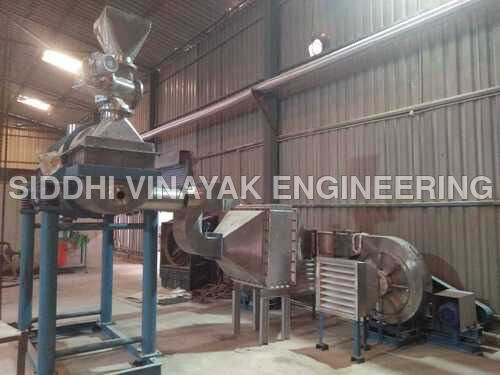
Tell us about your requirement

Price:
Quantity
Select Unit
- 50
- 100
- 200
- 250
- 500
- 1000+
Additional detail
Mobile number
Email



GST : 24ACGFS0612Q1ZZ

- Plot No. 235, Pushpam Industrial Estate, Nika Tube Compound, Phase - I, G.I.D.C., VatvaAhmedabad - 382445, Gujarat, India
- Phone : 08045478460

- Mr Siddharth J. Nayak (Partner)
- Mobile : 08045478460
- siddhivinayakengg12@gmail.com
- Mobile : +919898767079, +919510061508

 Send Inquiry
 Send SMS
SIDDHI VINAYAK ENGINEERING
All Rights Reserved.(Terms of Use)
Developed and Managed by Infocom Network Private Limited.
Developed and Managed by Infocom Network Private Limited.

