 Call Us :- 08045478460
 Send Inquiry




 Send Inquiry
Effluent Spray Dryer Plant
Price 250000.00 INR/ Unit
MOQ : 1 Unit
Effluent Spray Dryer Plant Specification
- Power
- 30 kW to 100 kW Watt (w)
- Temperature
- 120 to 220 Celsius (oC)
- Fuel Type
- Diesel, Natural Gas, Coal, or Electricity
- Power Consumption
- 30 - 100 Kilowatt (kW)
- Heat Source
- Steam / Hot Air Generator / Furnace
- Material
- Stainless Steel (SS304/SS316)
- Voltage
- 415 V, 3-Phase, 50 Hz Volt (v)
- Technology
- Atomization by rotary/disc/pressure nozzle
- Installation Support
- Available
- Dryer Type
- Co-current / Counter-current Flow
- Product Recovery
- Powder Collector with Airlock Valve
- Evaporation Rate
- 25 kg/hr to 2000 kg/hr
- Control Panel
- PLC/SCADA based automated control system
- Capacity Range
- 100 LPH to 10,000 LPH
- Surface Finish
- Polished
- Dust Collection
- Cyclone Separator & Bag Filter Provided
- Noise Level
- Below 85 dB
- Application
- Industrial effluent drying, pharmaceutical, chemical, and food industries
- Feed Handling
- Pump or Gravity Feed System
Effluent Spray Dryer Plant Trade Information
- Minimum Order Quantity
- 1 Unit
- FOB Port
- Ahmedabad
- Supply Ability
- 10 Units Per Month
- Delivery Time
- 15 Days
- Sample Policy
- Contact us for information regarding our sample policy
- Main Domestic Market
- All India
Effluent Spray Dryer Plant About
Extensive collection of Effluent Spray Dryers are being offered by us to our prominent clients. They are widely used in several industries for speedily drying the industrial waste water called effluent having inorganic and organic salts. The Effluent Spray Dryers are well known in the market for their efficient and effective working capability and that without any trouble. They are highly durable, have robust configuration, cost effective price and greater reliability. They are properly tested on various parameters and then delivered to customers.
Advanced Automation
The spray dryer plant boasts an intuitive PLC/SCADA-based control panel, granting precise command over temperature (120C220C), flow rates, and process timings. This automation enhances operational accuracy, monitoring, and minimalizes manual intervention, leading to improved consistency and reduced human error during production runs.
Flexible Application Scope
Suited for drying demands in pharmaceuticals, chemicals, and food processing, the system accommodates both co-current and counter-current drying mechanisms. Supporting volumes from 100 to 10,000 LPH, it can adapt to batch or continuous operations, making it a versatile choice for a range of industrial effluent management needs.
Efficient Dust and Product Recovery
Equipped with a cyclone separator, bag filter, and a dedicated powder collector fitted with an airlock valve, the plant ensures high collection efficiency. This arrangement minimizes product losses and dust emissions, supporting cleaner operation while maximizing yield of the dried output.
FAQs of Effluent Spray Dryer Plant:
Q: How does the effluent spray dryer plant manage varying feed rates and capacities?
A: The plant is engineered with flexible feed handling options, allowing both pump-driven and gravity feed methods. It accommodates volumes from 100 to 10,000 LPH, and the automated PLC/SCADA controls adapt easily to changes in flow to maintain stable, high-quality drying performance.Q: What benefits does PLC/SCADA automation provide in daily operation?
A: PLC/SCADA automation ensures precise process control, real-time monitoring, and simplified troubleshooting. Users can easily adjust temperature, flow rate, and timing, reducing operational errors and improving output consistency.Q: When should a co-current versus a counter-current flow configuration be chosen?
A: Co-current drying is generally selected for heat-sensitive materials, as it exposes the product to high temperatures briefly. Counter-current flow is preferable for less sensitive products requiring more thorough moisture removal. Choice depends on product characteristics and desired moisture content.Q: Where is this spray dryer plant commonly installed and who supports the installation?
A: These systems are widely installed in pharmaceutical, chemical, and food processing facilities across India and internationally. Comprehensive installation support from experienced technicians ensures proper commissioning and operator training.Q: What is the process flow of effluent spray drying using this system?
A: Liquid feed enters through a pump or gravity system, passes through atomization nozzles (rotary, disc, or pressure), and is sprayed into a heated chamber. Moisture evaporates rapidly, with powder collected at the bottom, while dust is separated using cyclones and bag filters.Q: How is dust controlled during the drying operation?
A: Dust generated during drying is efficiently captured via a cyclone separator and bag filter system. This dual-stage dust collection minimizes airborne particulates, ensuring cleaner operation and product recovery.Q: What are the main usage benefits of this effluent spray dryer plant for industrial applications?
A: Key benefits include high throughput, powder yield maximization, reduced environmental impact, adaptable configurations for various feedstocks, low operational noise (below 85 dB), and compliance with stringent quality and safety standards.
Tell us about your requirement

Price:
Quantity
Select Unit
- 50
- 100
- 200
- 250
- 500
- 1000+
Additional detail
Mobile number
Email

More Products in Spray Dryer Category
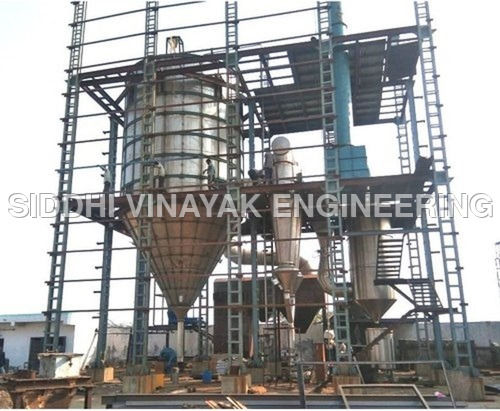
Spray Dryer
Price 2000000 INR / Unit
Minimum Order Quantity : 1 Unit
Technology : Direct Drying Technology
Fuel Type : Electricity / Gas / Diesel
Temperature : Up to 220 Celsius (oC)
Heat Source : Electric / Steam / Gas
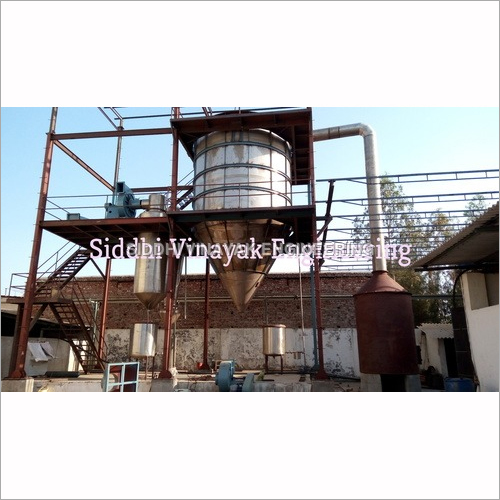
Effluent Spray Dryer
Price 3500000 INR / Piece
Minimum Order Quantity : 1 Piece
Technology : Spray Drying
Fuel Type : Solid Fuel
Temperature : 500 550 Celsius (oC)
Heat Source : Agro Waste, White Coal, Imported Coal, Briquette
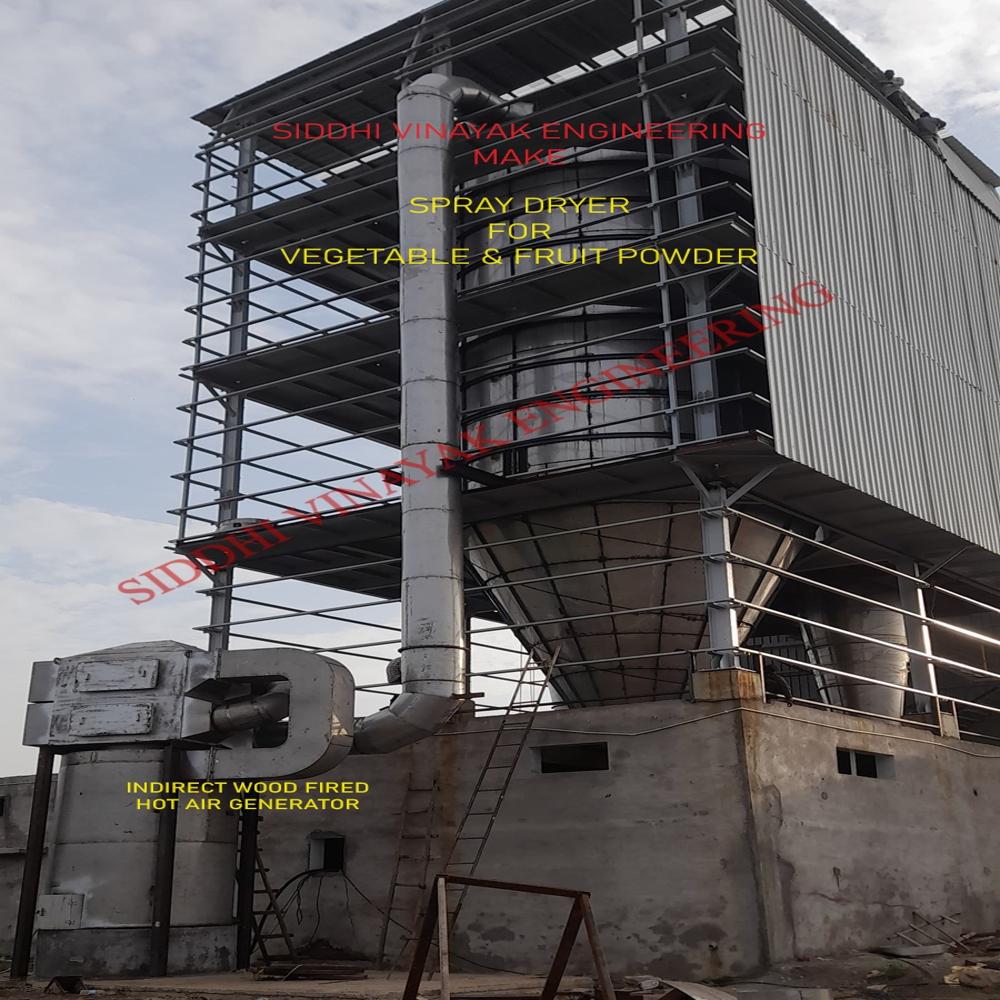
Rotary Disc Atomizer Type Spray Dryer
Price 3000000.0 INR / Piece
Minimum Order Quantity : 1 Piece
Technology : Drying Technology Robust Design
Fuel Type : Solid Fuel / Gas / Diesel / Any Other
Temperature : 200 Celsius (oC)
Heat Source : Solid Fuel / Gas / Diesel / Any Other
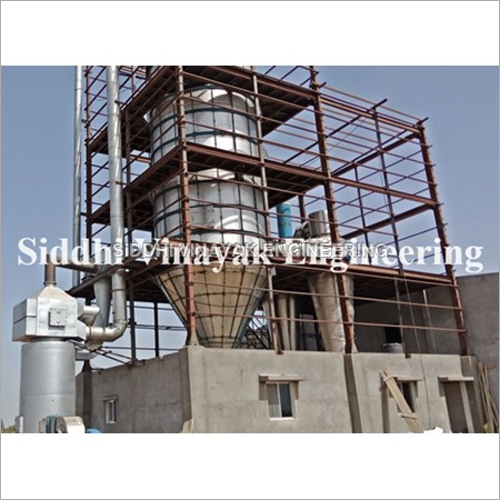
Tomato Spray Dryer
Minimum Order Quantity : 1 , , Unit
Technology : Spray Drying
Fuel Type : Electricity, Natural Gas, Diesel
Temperature : 150C 25(Inlet), 80C 90 (Outlet) Celsius (oC)
Heat Source : Electric / Steam / Gas


GST : 24ACGFS0612Q1ZZ

- Plot No. 235, Pushpam Industrial Estate, Nika Tube Compound, Phase - I, G.I.D.C., VatvaAhmedabad - 382445, Gujarat, India
- Phone : 08045478460

- Mr Siddharth J. Nayak (Partner)
- Mobile : 08045478460
- siddhivinayakengg12@gmail.com
- Mobile : +919898767079, +919510061508

 Send Inquiry
 Send SMS
SIDDHI VINAYAK ENGINEERING
All Rights Reserved.(Terms of Use)
Developed and Managed by Infocom Network Private Limited.
Developed and Managed by Infocom Network Private Limited.

